
Smartwatches are handy tools for keeping tabs on smartphone notifications, controlling media, and monitoring your health. Wear OS smartwatches offer great functionality over and above fitness, with access to Play Store apps, on-wrist messaging, and even Gemini integration with the latest models. Wear OS 6 is the latest iteration of the operating system, but Wear OS 7 is on the way.
So, if you're looking for the best possible option to help you meet fitness goals, stay on top of vitals, and remain connected throughout the day, Wear OS is the way to go. But now, the question becomes, which Wear OS brand should you rely on?
Google and Samsung codeveloped Wear OS 3 and have continued their partnership across another four years of major updates. Given this, a Samsung Galaxy or Google Pixel Watch would be your safest bet for Wear OS, with the fastest updates and best AI features. But there are reasons to consider third-party options as well from reputable brands like OnePlus, Mobvoi, or Xiaomi. Let's dive in!
At a glance
Specs | Samsung Galaxy Watch 8 | Google Pixel Watch 4 | Samsung Galaxy Watch 7 | OnePlus Watch 3 | Samsung Galaxy Watch 8 Classic | Samsung Galaxy Watch Ultra (2025) |
|---|---|---|---|---|---|---|
Display | 40mm: 1.34-inch (438x438) AMOLED, 3,000 nits 44mm: 1.47-inch (480x480) AMOLED, 3,000 nits | 41mm: 1.33-inch (426 x 426) Actua 360 AMOLED LTPO display, 3,000 nits 45mm: 1.49-inch (480 x480) Actua 360 AMOLED LTPO display, 3,000 nits | 40mm: 1.3-inch (438x438) AMOLED, 2,000 nits 44mm: 1.5-inch (480x480) AMOLED, 3,000 nits | 43mm: 1.32-inch (466 x 466) AMOLED, 1,000 nits 46mm: 1.5-inch (466x466) AMOLED, 2,200 nits | 46mm: 1.34-inch (438x438) AMOLED, 3,000 nits | 47mm: 1.5-inch (480x480) AMOLED, 3,000 nits |
Processor | Exynos W1000 | Snapdragon W5 Gen 2 | Exynos W1000 | Snapdragon W5 | Exynos W1000 | Exynos W1000 |
Memory/storage | 2GB/32GB | 2GB/32GB | 2GB/32GB | 2GB/32GB | 2GB/64GB | 2GB/64GB |
Battery | 40mm: 325mAh 44mm: 435mAh | 41mm: 325mAh 45mm: 455mAh | 40mm: 300mAh 44mm: 425mAh | 43mm: 354mAh 46mm: 631mAh | 46mm: 445mAh | 47mm: 590mAh |
Sensors | BioActive sensor (Optical + Electrical Heart Signal + BIA), temperature, accelerometer, barometer, gyro, geomagnetic, light | Compass, altimeter, barometer, magnetometer, 3-axis accelerometer, gyroscope, ambient light, multi-path optical heart rate sensor, cEDA, SpO2, ECG, far field skin temperature | BioActive sensor (Optical Bio-signal sensor+ Electrical Heart Signal + Bioelectrical Impedance Analysis), temperature, accelerometer, barometer, gyro, geomagnetic, light | Optical HR, SpO2, ECG, wrist temperature, accelerometer, barometer, geomagnetic, gyroscope, light | BioActive sensor (Optical + Electrical Heart Signal + BIA), temperature, accelerometer, barometer, gyro, geomagnetic, light, 3D Hall | BioActive sensor (Optical Heart Rate + Electrical Heart Signal + Bioelectrical Impedance Analysis), temperature, accelerometer, barometer, gyro, geomagnetic, light |
Best overall

The Samsung Galaxy Watch 8 has a dynamic redesign that you may or may not like. But beneath the surface, you're getting the same dependable Exynos hardware and long Wear OS software support as ever. Samsung offers an impressive four years of Wear OS updates, and the Galaxy Watch 8 is a better fit than the Watch 8 Classic or Ultra for most people.
Our Galaxy Watch 8 reviewer had nothing but praise for the "most comfortable smartwatch" he's worn. The "cushion" design makes the Watch 8 skinnier than ever, while the Dynamic Lug strap system ensures that it rests flatter against your wrist. This makes it more comfortable and accurate for sleep tracking. You also get Samsung Health AI insights like Energy score and Vascular Load.
Whether you like the look or not, you'll appreciate the new Samsung spin-off of Wear OS 6. The multi-info Tiles incorporate a ton of information in each scrollable Tile, the Now Bar gives you a watch face shortcut to access in-use apps like Maps or a timer, and you can add third-party watch faces again after Google blocked them on OS 5.
All recent Wear OS watches have Gemini support, but you'll appreciate that the Galaxy Watch 8's Gemini integration works with both Google and Samsung apps, depending on your preference. It's a significant smarts upgrade over Assistant.
Overall, the Galaxy Watch 8 isn't significantly different from the Watch 7, aside from its 3,000-nit display and some exclusive Health insights like the antioxidant index. The main downsides are that we haven't seen a significant battery life jump in some time, and that you may not like the digital bezel controls. But the Galaxy Watch Ultra or Classic will solve those issues for you.
Attribute | Quick look | Score |
|---|---|---|
Display | Two AMOLED display sizes with great brightness and refresh rate | ★★★★★ |
Design | Ultra lightweight and thin with two size options, but you may not like its look | ★★★★☆ |
Price | Not too expensive, though pricier than Watch 7 was, with no mandatory subscription | ★★★★☆ |
Performance | Exynos W1000 chip is top-class for Wear OS performance | ★★★★★ |
Battery life | 40-48 hours easy, recharging isn't the fastest | ★★★☆☆ |
Features | Four OS updates; Galaxy AI integration; lots of health and fitness tracking metrics | ★★★★★ |
Best design

The Pixel Watch series gives you Google's purest form of Wear OS and the best integration with Google apps and the Android ecosystem. Whether you have a Pixel phone or not, the Pixel Watch 4 is a fantastic option for any Android fan, even if the Galaxy Watch 8 has it beat for both promised version updates and years of security updates.
In my Pixel Watch 4 review, I broke down the many reasons to appreciate this smartwatch more than past generations. The domed, 3,000-nit display makes the overall rounded look feel more natural. The combination of the new Snapdragon chip and more efficient OS makes the Watch 4 battery more reliable than past generations, especially with the 45mm model. And the new Wear OS 6 UI is one of the best parts of the Watch 4, with smoother transitions, dynamic theming, and better Tiles.
The Pixel Watch 4 fitness experience is significantly improved, with better dual-frequency GPS accuracy, solid HR data, and Fitbit insights into your health. Google has rolled out a new Fitbit Personal Health Coach that builds a personalized, adjustable workout plan based on Gemini smarts, with the ability to "speak" to the Coach and request advice. It shows how Google is building AI into the watch experience.
On that note, the Pixel Watch 4 has unique Gemini perks: the Raise to Talk feature that lets you summon the AI without a wake word or button shortcut, and on-device message reply suggestions.
Overall, the Pixel Watch 4 is an excellent Wear OS watch option, and would arguably be the best if Google guaranteed more than two version updates. It's not as rugged as a Galaxy Watch, but at least it's self-repairable if something happens.
Attribute | Quick look | Score |
|---|---|---|
Display | Vibrant, 3,000-nit display in two sizes with a unique dome look | ★★★★★ |
Design | You'll either find the curved, bezel-less Watch 4 charming or prefer a more traditional look, but it's fairly light and comfortable | ★★★★☆ |
Price | Average for a flagship wearable; you'll have to pay for Fitbit Premium after six months | ★★★☆☆ |
Performance | Snapdragon W5 Gen 2 is a step up, facilitating on-board AI and more efficient battery | ★★★★☆ |
Battery life | Up to 48 hours on a single charge, perfectly respectable, with ultra-fast charging | ★★★☆☆ |
Features | Fitbit integration; fast software updates from Google; satellite SOS in LTE model; Gemini Raise to Talk; Loss of Pulse alerts | ★★★★★ |
Best value
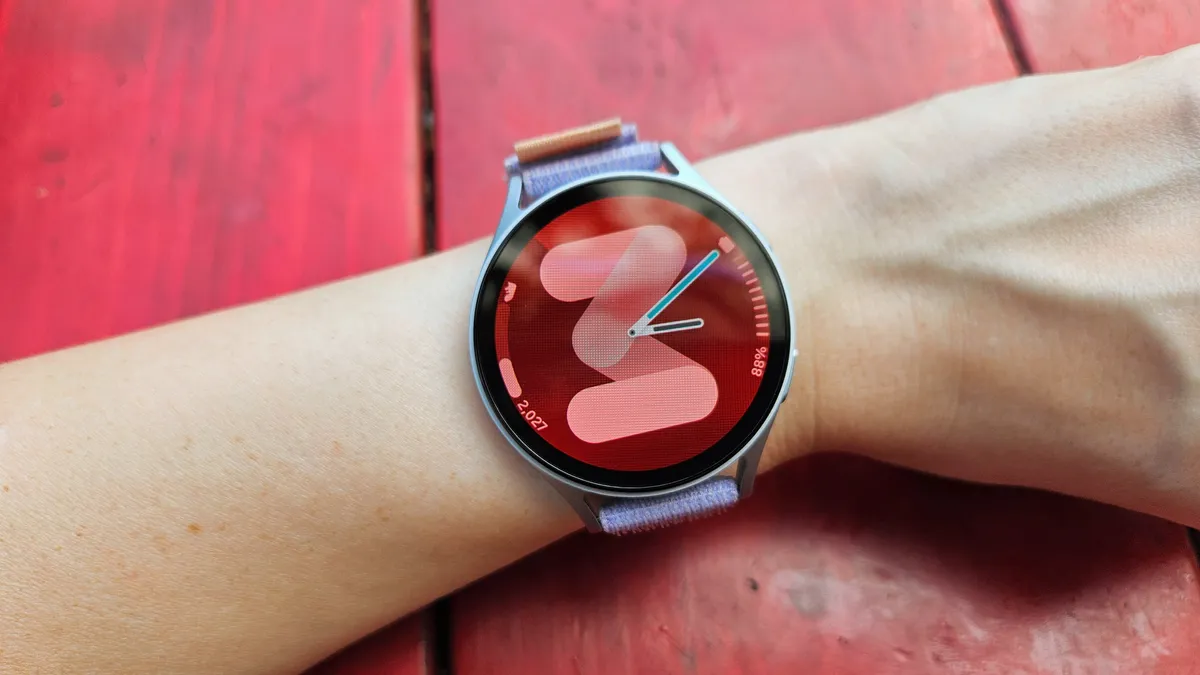
If you compare the Galaxy Watch 8 vs. 7, they obviously look quite different, but not internally. The Exynos W1000 chip, 2GB of RAM, 32GB of storage, BioActive sensors, and display resolution are largely unchanged, and the Watch 7 received Wear OS 6 in October 2025. Most relevant to you, you'll usually find it at a significant discount as Samsung clears out stock.
While the Watch 8 redesign has tangible comfort benefits, you might prefer the old look, and it's still quite light on your wrist. The Watch 7 dimensions are slightly different, so the 40mm model's display is slightly smaller (1.3 vs. 1.34 inches), but the 44mm display is larger (1.5 vs. 1.47 inches). While the Watch 8 display is brighter, the Watch 7's 2,000 nits is honestly good enough for most situations.
Samsung made a couple of Samsung Health features exclusive to the Galaxy Watch 8, meaning you won't get the antioxidant index, vascular load, or bedtime guidance with the Watch 7. But otherwise, it's the same app with the same workouts and Running Coach, along with the same dual-band GPS.
Our Galaxy Watch 7 reviewer felt it was close to a "re-run of the Galaxy Watch 6," but still appreciated its reliable performance and cool (if finicky) gesture controls. It had no real competition for the best Wear OS watch until the Watch 8 supplanted it. Four years of Wear OS updates is excellent, and while last-gen Pixel Watches get faster version updates, Samsung offers more, showing that slow and steady wins the race.
Many last-gen Wear OS watches like the OnePlus Watch 2R are no longer available, and Samsung's "value" watch, the Galaxy Watch FE, is a major downgrade on the Watch 7; even if you find the Fan Edition model for cheaper, I'd recommend getting the old flagship. Only the Pixel Watch 3 is a reasonable last-gen alternative, and it's just a little more expensive with fewer updates left.
Attribute | Quick look | Score |
|---|---|---|
Display | Respectable brightness, available in two sizes with speedy refresh rate | ★★★★☆ |
Design | A more traditional rounded case that's a bit basic and flat, but comfortable | ★★★☆☆ |
Price | Until it goes out of stock, it's very affordable considering the hardware and support | ★★★★★ |
Performance | Lightning-fast with plenty of RAM | ★★★★★ |
Battery life | 40-hour estimate is fairly standard, slightly smaller capacity than Watch 8 | ★★★☆☆ |
Features | Four OS updates; Galaxy AI integration; lots of health and fitness tracking metrics | ★★★★★ |
Best battery life

With Fossil abandoning the smartwatch game and Mobvoi watches still stuck on Wear OS 4 with no Google Assistant or Gemini, there aren't many Wear OS watch options outside of Google and Samsung. But the OnePlus Watch 3 is an intriguing exception, thanks mainly to its fantastic battery life at a more affordable price and slightly lighter weight than a Galaxy Watch Ultra.
While the OnePlus Watch 2 topped out at around four days of use, the Watch 3 comfortably lasts for five days, and in our testing, it even pushed past that to nearly six days. It's partially thanks to the solid-state, 631mAh battery, but also because of the more power-efficient BES2800 co-processor that handles background tasks on OnePlus's custom RTOS. Essentially, OnePlus leaves Wear OS for apps and other demanding tasks, which helps the Watch 3 last longer.
Our OnePlus Watch 3 reviewer praised the now-functional rotating crown, the "Pixel Watch-like haptics," and the smaller border around the 1.5-inch, 2,200-nit AMOLED display, which features LTPO and DC dimming. He also appreciated the OHealth workout insights and the more accurate HR data than the last generation.
Overall, the OnePlus Watch 3 vs. Watch 2 jump in quality is significant, and there's a new OnePlus Watch 3 43mm option for the same price as the 47mm model if you want something more comfortably light — though its battery life is significantly shorter as a trade-off.
Our main concern with recommending OnePlus Watches is that they're significantly slower to receive updates. The OnePlus Watch 2 took a while to get Wear OS 5 despite and we only know the Watch 3 will receive Wear OS 6 sometime in 2026, likely around the time Galaxy and Pixel Watches get Wear OS 7.
Attribute | Quick look | Score |
|---|---|---|
Display | Two LTPO AMOLED options with solid brightness and eye-friendly DC dimming | ★★★★★ |
Design | Titanium case with MIL-STD-810H rating; striking, classic design, but a bit heavy | ★★★★☆ |
Price | Priced well for what's on offer, cheaper than an "Ultra" watch | ★★★★☆ |
Performance | Smooth Wear OS and RTOS, though on an older Snapdragon chip | ★★★★☆ |
Battery life | The best of any Wear OS watch | ★★★★★ |
Features | Dual-band GPS; OHealth fitness insights; a year behind with Wear OS 5 | ★★★☆☆ |
Best controls

Samsung watches dominate our list of the best Wear OS watches for a reason. Every perk of the Galaxy Watch 8 — One UI 8 Watch Tiles, a rugged design, accurate health sensors, a 3,000-nit AMOLED display, and the most version updates of any Android brand — applies to the Classic, too.
So why spend an extra $150 to get the Galaxy Watch 8 Classic? The three tangible upgrades are the physically rotating bezel, extra 32GB of storage, and third Quick Button for shortcuts, such as starting or pausing a workout. The latter is a bit niche, and the extra storage only really matters if you like to download lots of music or podcasts onto the watch.
Mainly, you're paying for style and more exact controls. As practical as the skinny Watch 8 design is, it's not traditional with its exposed squircle case. The Galaxy Watch 8 Classic has equally flat edges, but the steel bezel and the 60-second scale border around the display disguise it a bit. And outside of aesthetics, it's far easier to rotate through One UI with a physical bezel, while the Watch 8 digital bezel is more finicky.
The downside to the new Classic design is that it weighs as much as a Galaxy Watch Ultra, without the longer battery life or the larger display. You're mainly buying this for its looks and the more exact scrolling, but at least it costs less than the Ultra.
Attribute | Quick look | Score |
|---|---|---|
Display | Very bright and smooth, but only one 1.34-inch option | ★★★☆☆ |
Design | Steel-heavy design is quite heavy, but the unique rotating bezel controls and "classic" style are what you're paying for | ★★★☆☆ |
Price | More expensive than the Watch 6 and 4 Classic used to be | ★★☆☆☆ |
Performance | Same premium performance as other Galaxy Watches | ★★★★★ |
Battery life | Same average performance as the Watch 8 | ★★★☆☆ |
Features | Four OS updates; Galaxy AI integration; antioxidant index; rotating bezel with 3D Hall sensor | ★★★★★ |
Best premium

Like with the Classic, the Galaxy Watch Ultra (2025) is a niche purchase for anyone willing to spend hundreds more for specific quality-of-life upgrades over the base Watch 8. The most important and obvious one is battery life: It lasts about 60–80 hours depending on usage, so you won't need to worry about daily charging. Whether that's worth the extra $300 is up to you!
My original Galaxy Watch Ultra (2024) review praised this watch for features that were exclusive, but came to other Samsung watches in 2025: the 3,000 nit display on the Watch 8 and the third Quick Button on the Watch 8 Classic. You're getting the same performance and touch bezel controls as the Watch 8, too, and the cheaper model even borrowed its square look, but made it lighter.
Ultimately, you'll need to choose between the Galaxy Watch Ultra and OnePlus Watch 3. They share the same battery life calling card, titanium materials, RAM, and display size. The OnePlus Watch 3 lasts longer and charges much faster while costing much less, while the Galaxy Watch Ultra has objectively better software support, a brighter display, more storage, more health sensors, and built-in cellular data. It comes down to whether you need a long-lasting Wear OS watch or a premium Wear OS watch with good battery.
Attribute | Quick look | Score |
|---|---|---|
Display | Only one display size, but excellent brightness | ★★★★☆ |
Design | Only one size option; titanium build with no rotating bezel; possibly too bulky for some people | ★★★☆☆ |
Price | Too expensive unless you're an enthusiast or can find a deal | ★☆☆☆☆ |
Performance | Matches the other Galaxy Watches with impressive speed | ★★★★★ |
Battery life | 60–100 depending on usage and battery saver settings | ★★★★★ |
Features | Long software support; everything but the kitchen sink | ★★★★★ |
Honorable mentions
There aren't as many Wear OS alternatives as there used to be, with Fossil leaving its watches behind and Mobvoi slowing down its releases. That being said, there are a few Wear OS options that didn't make the list and are worth including, in case you're undecided.

Still relevant
The Pixel Watch 3 was one of my first recommendations before the Watch 4 took its place. Comparing the Pixel Watch 4 vs. 3, it's clear that the newer model made some fairly substantial upgrades, but the Watch 3 is more affordable if you don't care about the domed display, dual-band GPS, Gemini Raise to Talk, or satellite SOS. You're still getting Wear OS 6 (and Wear OS 7 next fall), Fitbit insights, and Gemini commands.

Waiting for a sign
On paper, the Mobvoi TicWatch Pro 5 and TicWatch Pro 5 Enduro give you similar perks to a OnePlus Watch: over three days of battery life, fast performance, Play Store apps, and essential health and fitness data. And both are available at extreme discounts these days. But it's getting harder to recommend them because we don't know whether they'll get future Wear OS updates, and they never received Google Assistant support, let alone Gemini! We'd love to see this change, but it may only happen on a future TicWatch.

Still excellent for battery
Even though it's a generation old, the OnePlus Watch 2 still kills it when it comes to battery life compared to most other Wear OS smartwatches. The OnePlus Watch 3 vs. 2 gap means you're getting an inactive crown, fewer health sensors, and no smaller option, but you still get fast charging and a fairly large display. I'd still like to see OnePlus release its delayed Wear OS 5 before fully recommending it.

The official Wear OS budget watch
The 2024 Galaxy Watch FE is essentially a rereleased Galaxy Watch 4 with a couple of minor design changes and newer software. It's outdated compared to most Galaxy Watches, with an older processor, less RAM, and shorter battery life, but if the Galaxy Watch 7 goes out of stock, or if this gets a major discount, this may become the "best" cheap Samsung watch available, so it's worth mentioning.

Theoretically good
Xiaomi is the one Wear OS brand that we haven't tested because it's not available in North America. On paper, it has similar specs to an older OnePlus or Pixel Watch, with its Snapdragon W5+ Gen 1 chip, 2GB of RAM, multi-day battery life, and dual-band GPS, and it received Wear OS 5 in August, meaning it's still getting support. If you have a Xiaomi phone, you may want to try it; we just can't give you a preview.
How to choose
As you can see, Wear OS covers a significant portion of the wearable market. While it may be slightly different from the Wear OS experience you're accustomed to, the latest and greatest Samsung Galaxy Watch 8 is the best option simply because it offers everything, from a variety of health sensors to Google Assistant support, all in an excellent design. But don't discount the Samsung Galaxy Watch 7 just yet.
You can opt for the Pixel Watch 4 instead, which we recommend if you prefer a more stylish design or value Fitbit integration. The new model comes in two sizes as does the previous-gen Pixel Watch 3, which also remains a good choice to consider if you want to save a few bucks.
To help you decide, review the health, wellness, and notification features that are essential to you. With Wear OS, you may want to leverage features like Google Assistant, Google Maps, Google Wallet, and more, so see how (and if) these work on the watch as well. Battery life is also a key consideration: if you are active and tend to use the watch frequently to track workouts, run apps, and more, you'll want a smartwatch that can last beyond a day on a single charge or at least recharge quickly when it needs a boost.
Finally, consider your phone. While the Samsung Galaxy Watch 8 is the best overall option, it works optimally and unlocks all its features when paired with a Samsung Galaxy phone. If you own a phone from a different brand, you may want to consider another model on this list. If you own a OnePlus phone, such as the OnePlus 15, you'll find that the OnePlus Watch 3 is the perfect companion.
How we test
☑️ One of the oldest and most trusted Android sites on the web
☑️ Over 15 years of product testing
☑️ Thousands of products reviewed and tested since 2007
☑️ Dozens of smartwatches, fitness trackers, and smart rings tested every year by our team
As one of the earliest sites to review Android smartwatches, we take wearable testing seriously. Senior editor and smartwatch expert Michael Hicks evaluates each device using the same thorough process we apply to smartphones, combining real-world use, controlled testing environments, and targeted benchmarks to gain a comprehensive understanding of performance and reliability.
Rather than take manufacturer claims at face value, Michael puts on chest and arm straps and hits the street to verify heart rate tracking, pedometer consistency, and GPS accuracy. This means that you'll occasionally see him running 20-mile races wearing four smartwatches at a time.
Yes, our intensive testing methods may take time, and we aren't always the first site to publish reviews for the latest devices, but that's because we prioritize accuracy and instilling confidence in our readers, not just generating clicks. In other words, if we're recommending a device, you can rest assured knowing that we've spent hours ensuring it's worth your hard-earned money.

